Discover the best sleep routine for better energy with simple habits that improve sleep quality, recovery, focus, and wellness.
Best Sleep Routine for Better Energy: A Beginner's Guide
Introduction
Do you wake up feeling tired even after spending 7–8 hours in bed?
You’re not alone.
Many people struggle with low energy throughout the day because they focus only on the number of hours they sleep instead of the quality of their sleep routine.
A good sleep routine can help:
- Increase daily energy
- Improve focus and productivity
- Support weight management
- Improve mood
- Help recovery and overall health
The good news is that improving sleep doesn’t require expensive gadgets or complicated routines.
In this guide, you’ll learn the best sleep routine for better energy and practical habits you can start tonight.
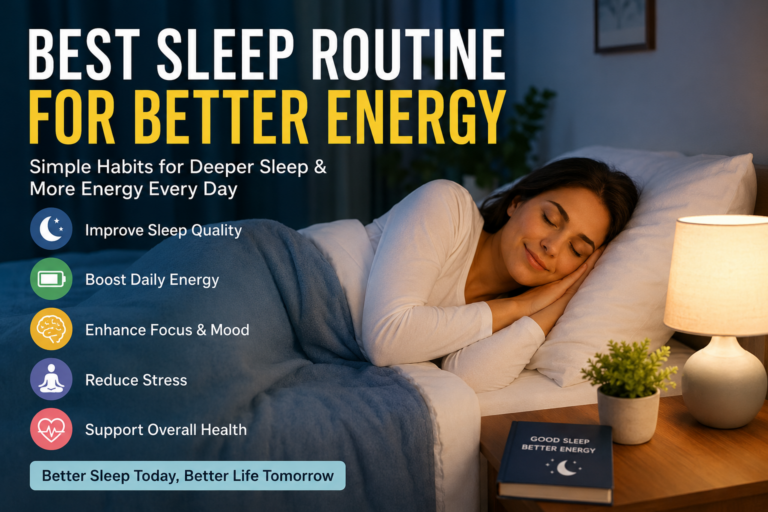
Why Sleep Is Important for Energy
Sleep is when your body repairs and restores itself.
During quality sleep:
Muscles recover
Hormones regulate
Memory improves
The brain clears waste products
Energy stores are replenished
🔬 Scientific Reason
Poor sleep may affect:
Metabolism
Appetite control
Stress hormones
Mental performance
Even small improvements in sleep quality can significantly improve daytime energy levels.
🌙 1. Maintain a Consistent Sleep Schedule
Your body follows a natural internal clock called the circadian rhythm.
What to Do:
Go to bed at the same time daily
Wake up at the same time daily
Follow the schedule even on weekends
Benefits:
Better sleep quality
Easier morning wake-ups
Improved energy levels
2. Avoid Screens Before Bed
Blue light from phones, tablets, and TVs may interfere with sleep signals.
Better Alternatives:
Reading a book
Journaling
Meditation
Listening to relaxing music
Tip:
Stop screen use at least 30–60 minutes before bedtime.
3. Limit Caffeine in the Evening
Caffeine can remain in your system for several hours.
Common Sources:
Coffee
Energy drinks
Some teas
Soft drinks
Tip:
Avoid caffeine at least 6–8 hours before bedtime.
4. Eat a Light Evening Meal
Heavy meals close to bedtime may affect sleep quality.
Better Choices:
Yogurt
Fruit
Nuts
Light protein snacks
Avoid:
Large meals
Excess sugar
Spicy foods before bed
5. Create a Relaxing Sleep Environment
Your bedroom should support quality sleep.
Ideal Conditions:
Cool temperature
Dark room
Quiet environment
Comfortable mattress and pillows
Benefit:
Your brain associates the bedroom with rest.
6. Exercise During the Day
Regular physical activity can improve sleep quality.
Good Options:
Walking
Yoga
Strength training
Cycling
Tip:
Avoid intense exercise immediately before bedtime.
🌅 7. Get Morning Sunlight
Natural sunlight helps regulate your sleep-wake cycle.
Benefits:
Better sleep at night
Improved mood
Higher daytime energy
Tip:
Spend 10–20 minutes outdoors in the morning.
🧘 8. Reduce Stress Before Bed
Stress is one of the biggest causes of poor sleep.
Relaxation Techniques:
Deep breathing
Meditation
Gratitude journaling
Gentle stretching
Result:
A calmer mind often leads to better sleep.
💧 9. Stay Hydrated Throughout the Day
Dehydration may contribute to fatigue.
Tip:
Drink enough water during the day but avoid excessive fluids right before bedtime.
📖 10. Build a Simple Bedtime Routine
A bedtime routine signals your body that it’s time to sleep.
Example Routine:
Dim lights
Brush teeth
Read for 10 minutes
Practice deep breathing
Go to bed
Consistency helps train your body for better sleep.
Sample Best Sleep Routine for Better Energy
7:00 PM
Light dinner
8:00 PM
Short walk
9:00 PM
Reduce screen time
9:30 PM
Read or journal
10:00 PM
Sleep
6:00 AM
Wake up and get sunlight
Common Sleep Mistakes to Avoid
- ❌ Staying up late on weekends
- ❌ Using phones in bed
- ❌ Drinking caffeine late in the day
- ❌ Eating heavy meals before sleep
- ❌ Irregular sleep schedules
- ❌ Sleeping in a noisy environment
Benefits of a Healthy Sleep Routine
A good sleep routine may help:
- Improve energy
- Increase productivity
- Support healthy weight management
- Improve mood
- Enhance focus and concentration
- Support overall wellness
Frequently Asked Questions (FAQ)
1. How many hours of sleep do adults need?
Most adults benefit from 7–9 hours of quality sleep per night.
2. Why am I tired even after sleeping 8 hours?
Sleep quality, stress, sleep disorders, or inconsistent schedules may affect energy levels.
3. Is it okay to use my phone before bed?
Reducing screen exposure before sleep may help improve sleep quality.
4. Does exercise improve sleep?
Regular physical activity often helps people sleep better and feel more energetic.
5. What is the best bedtime for adults?
The best bedtime is one that allows consistent 7–9 hours of sleep and fits your lifestyle.
Conclusion
Better energy starts the night before.
You don’t need expensive supplements or complicated routines to improve your sleep.
Simple habits like:
✔ Consistent sleep schedules
✔ Reduced screen time
✔ Daily exercise
✔ Better stress management
✔ Healthy bedtime routines
can make a significant difference in your energy and overall health.
Start with one habit tonight and build from there. Small changes practiced consistently can lead to better sleep and a healthier, more energetic life.
vijaysindhe.com is not a part of Facebook.com or Facebook Inc or Google.com or Google Inc. Additionally, vijaysindhe.com is not endorsed by Facebook.com or Facebook Inc or Google.com or Google Inc.